There are two CEPT reciprocal agreements that enable amateurs from one signatory country to operate while visiting other signatory country for up to 90 days wihout having to get permission from that country's communications regulator, many non-CEPT countries such as USA, Australia are participants:
A third category exists, the CEPT Radio Amateur Entry Level although this is not yet a formal CEPT Recommendation, the qualification requirements are described in ECC Report 089
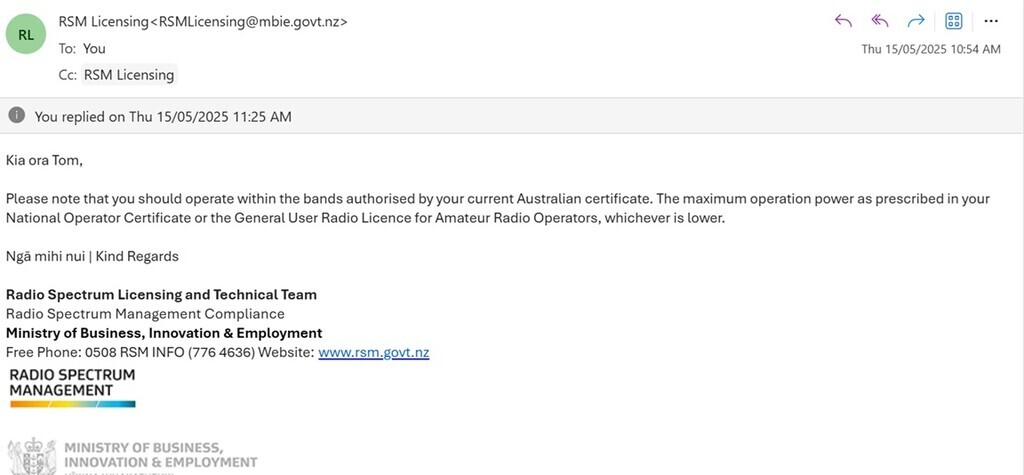
At the present time there is no formal automatic reciprocal agreement for holders of UK Foundation as it appears Ofcom has not been asked to sign up to CEPT Novice ECC/REC/05(06) for Intermediate holders, however, both Foundation and Intermediate can obtain permission to operate simply by emailing the national regulator giving date of your planned visit and attaching a PDF of the three page licence document (they do not need the separate lengthy T&C document).
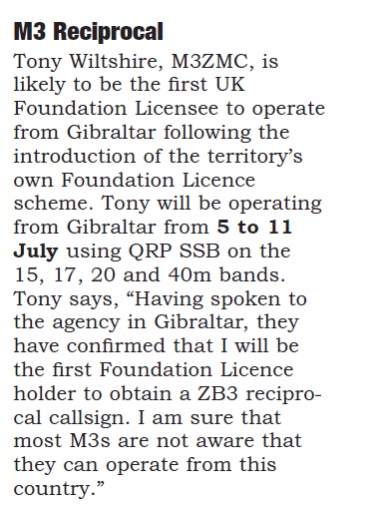
Many countries permit operation by UK Foundation and Intermediate holders, the first operation overseas by a UK Foundation holder took place in 2003 and was reported in the July 2003 edition of RadCom. Since then Foundation holders have successfully obtained permission to operate in countries around the world.
If granted permission you usually identify using that country's short-term call sign prefix followed by your core UK call sign, e.g. DL/M7ZZZ, unless the national regulator has told you otherwise. Those amateurs still holding an Intermediate “2” callsign must include the apropriate UK Regional Secondary identifier for their Main Station Address when operating abroad e.g. DL/2E0ZZZ.
The use of the word “Novice” by CEPT is unfortunate and can lead to confusion. The CEPT Novice is equivalent to UK Intermediate, USA General and Australian Standard licence-levels. “Novice” was the word used in the UK from 1991-2002 to describe what is now the Intermediate-level licence.
It is the responsibility of the amateur to check and abide by the current regulations in the country they will be visiting. It is rare to find two countries with exactly the same regulations, there can be significant differences in the available bands and power levels. When operating from another country you should sign that country's short-term call sign prefix in front of your core UK call sign (no RSL for M or G calls) e.g. in Germany M5ZZZ would sign DL/M5ZZZ
The DARC maintains the definitive list of the CEPT HAREC T/R-61-01 and CEPT Novice ECC/REC/05(06) reciprocal operating arrangements for all countries in Europe. For each country it gives short-term call sign prefix, permitted frequencies, power, whether long-term guest permits with the national call sign might be available along with contact details for the communications regulator and national society, see Countries participating in CEPT HAREC T/R 61-01 or Novice ECC/REC05(06) Reciprocal Licensing Agreements
*HAREC “Yes*” means generally accepted or recognized but may require country-specific confirmation or additional local rules.
Additional notes: