
This is an old revision of the document!
Table of Contents
Modifying an Alinco DR-M06TH 6m transciever for packet usage
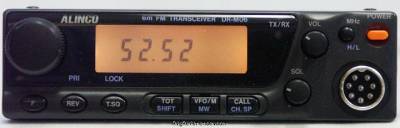
Finding an affordable single-band FM radio for 6m is a challenge, occasionally these Alincos turn up on eBay so I nabbed one tried my hand at modifying it. As it turns out they're well built, old-skool analogue architecture and a breeze to work on. The service manual is widely available online and is superb.
The PA puts out ~20W and can be adjusted using VR1. The deviation is adjusted with VR2 and is set ~5KHz from the factory. On receive it's (apparently) very selective & sensitive, and the second IF filter is 20KHz wide so this TRX might even work on wider bandwidth modes. Using an IC-705 as a reference receiver the wideband PLL phase noise looks to be very low and there are no horrendous key-up transients a-la FT-1500M.
After tapping the discriminator / modulator the radio was bench tested using an 857D and a pair of NinoTNCs; it works on 4k8 IL2Pc beautifully. The main issue with testing was those Aerial Facilities dummy loads are superb at 50MHz!
As we're using +/-2.5k deviation for these modes I also replaced the first IF crystal and second IF ceramic filters to try to squeeze every last fraction of a dB out of our links.
Ticking away happily as GB7WIN's 6m port! Live long and prosper little Alinco.
Schematic detail
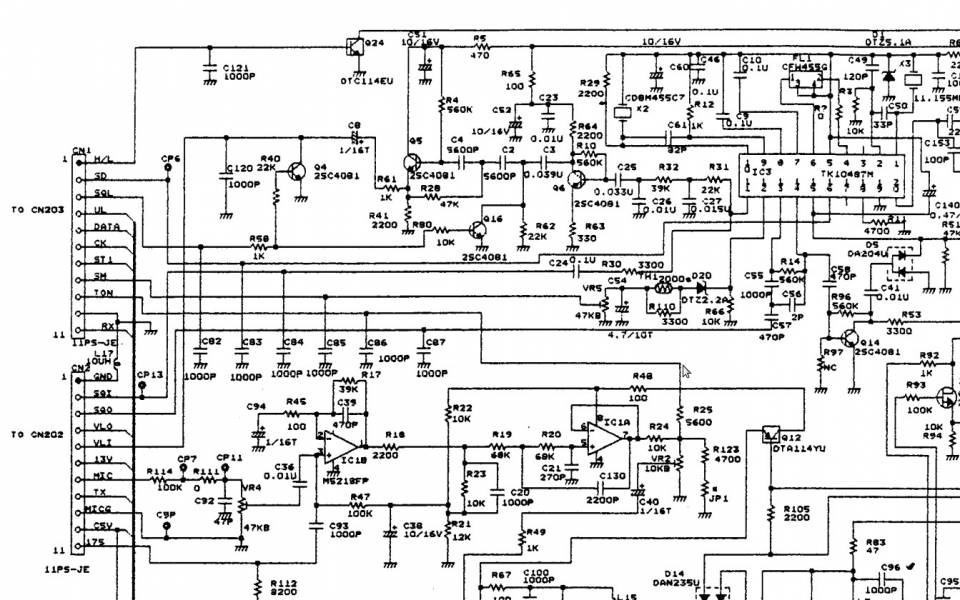
- Pin 11 of IC3 is the output from the discriminator
- The junction between C25 and C26 is the output of the de-emphasis filter and before the squelch pull-down transistors Q4 and Q16
- The junction of VR2 / R24 / R25 / R123 is the modulator input, via the deviation pot VR2 and coupling capacitor C40
- CP11 is the input to the mic preamplifier, pre-emphasis filter & modulator drive buffer amplifier
- PTT line is taken from the front panel connector, Pin 2 (3-o-clock position from the rear)
Tap points
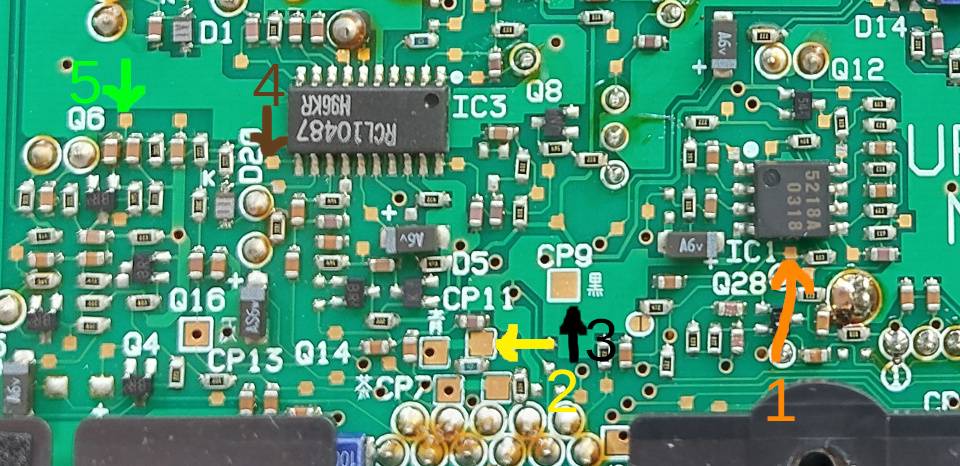
- “Flat” audio in / modulator input
- “Filtered” audio in / audio input to pre-emphasis & mic preamp circuit
- Ground
- “Flat” audio out / discriminator output
- “Filtered” audio out / output from de-emphasis circuit, before squelch pull-down transistors
Finished mods
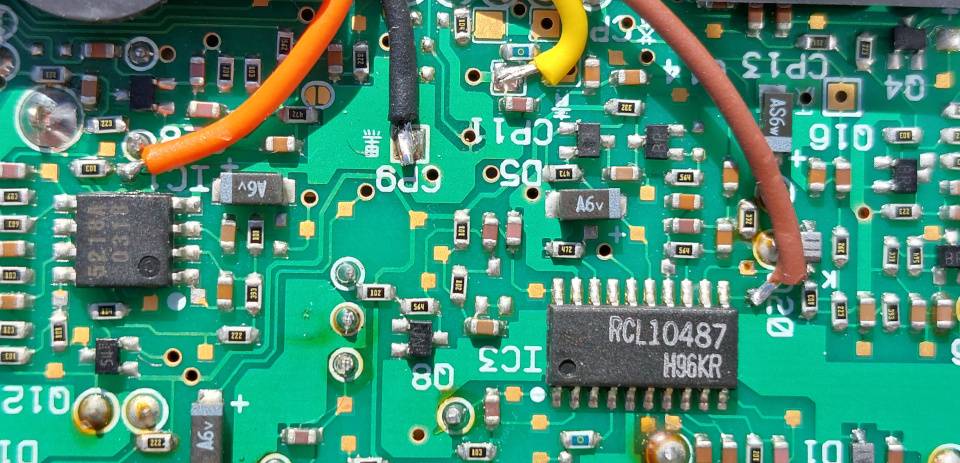
After initial tapping; the board is littered with test points so I soldered to them
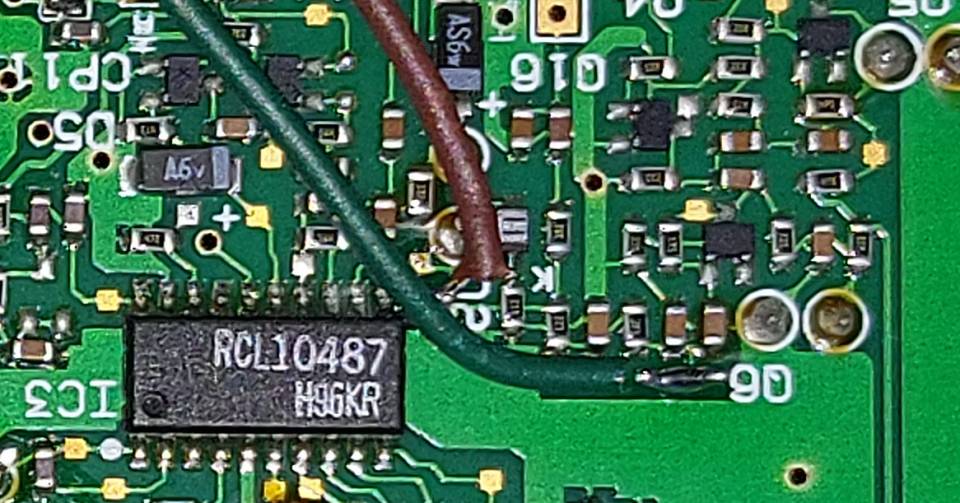
I decided to add a “filtered audio out” as I was using the Yaesu 6-pin Mini-DIN connector, so why not make the “1200” pin work too
Rear connector
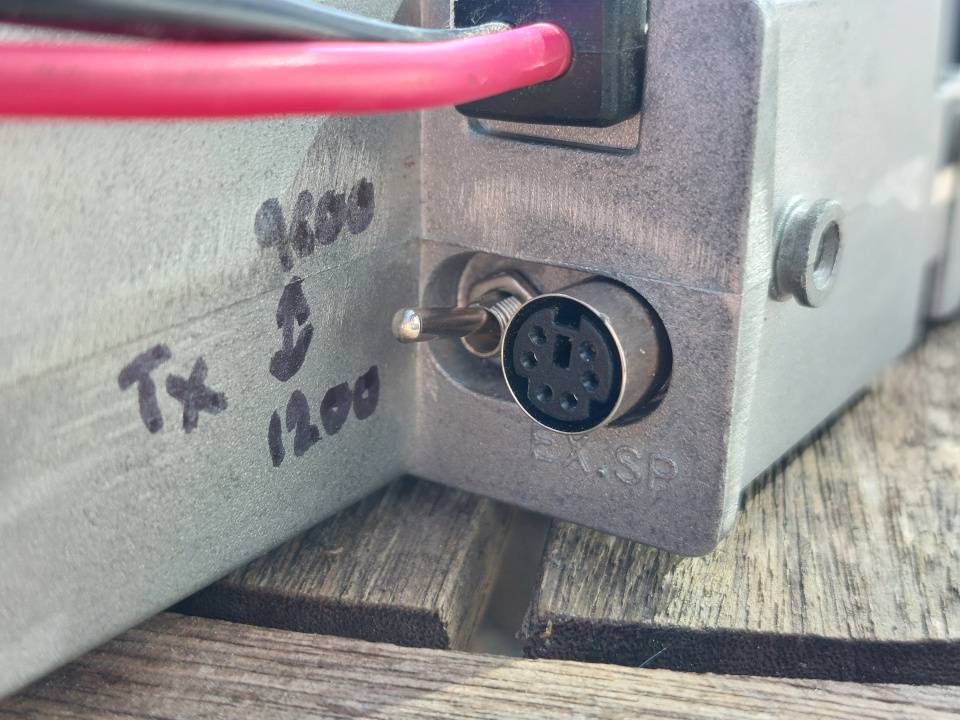
Rear connector & switch
I had a 6-pin Mini-DIN socket lying about; after removing the external speaker jack drilling out the hole allowed the connector to fit in. After pulling the wires through & soldering the connector I pushed it back into the hole & epoxied it into place. Pinout is the same as Yaesu use.
Alinco had also left another dimple in the casting, presumably for a different model of radio, so I drilled that out and installed a mini toggle switch to allow changing between “flat” audio in and “filtered” audio in.
IF Filters
Since this radio is being used for narrow packet and not wide voice I elected to replace the IF filters in an attempt to tighten up the receiver, which is far wider than we need in our application.
The first IF, FL2, consists of a pair of 10M15B 2-pole monolithic crystal filters. They have a reported -3dB bandwidth of +/-7.5KHz and 40dB rejection at +/-25KHz. The replacement parts are a pair of 10K6B 2-pole filters with a 3dB bandwidth of +/-3KHz and 40dB rejection at +/-10KHz.
The second IF, FL1, consists of a Murata CFW455F, -6dB bandwidth +/-6KHz, -40dB rejection at +/-12.5KHz , which was replaced with a CFW455G -6dB bandwidth +/-4.5KHz, -40dB rejection at +/-10KHz.
Other tweaks
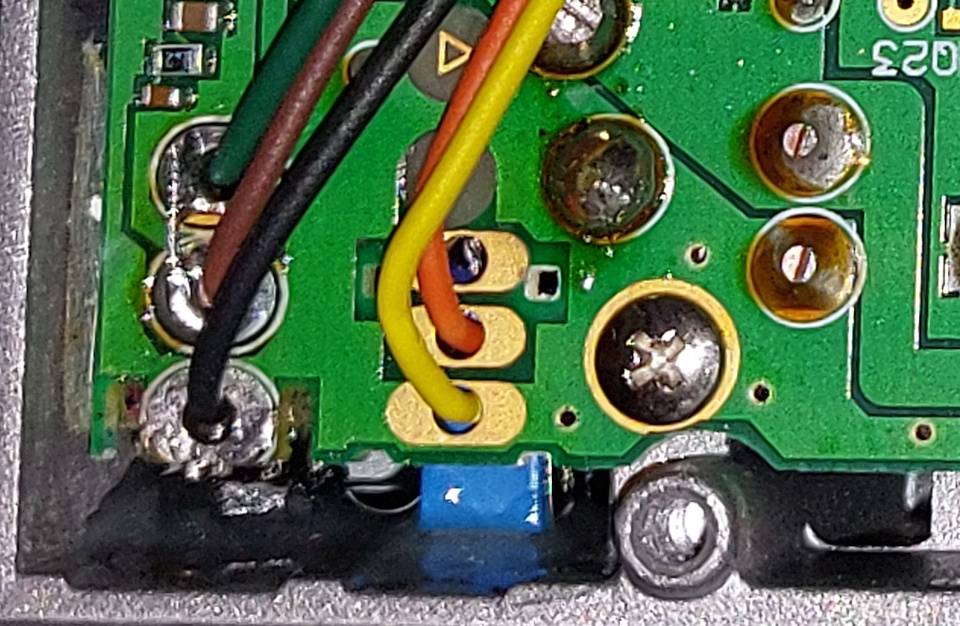
Detail of rear connector area
To route all the taps to the rear connector I poked them through the external speaker jack holes. A small bit of wire was also soldered between the tip and tap pads to route audio back to the internal speaker, normally this would be done within the speaker jack when nothing is plugged in.
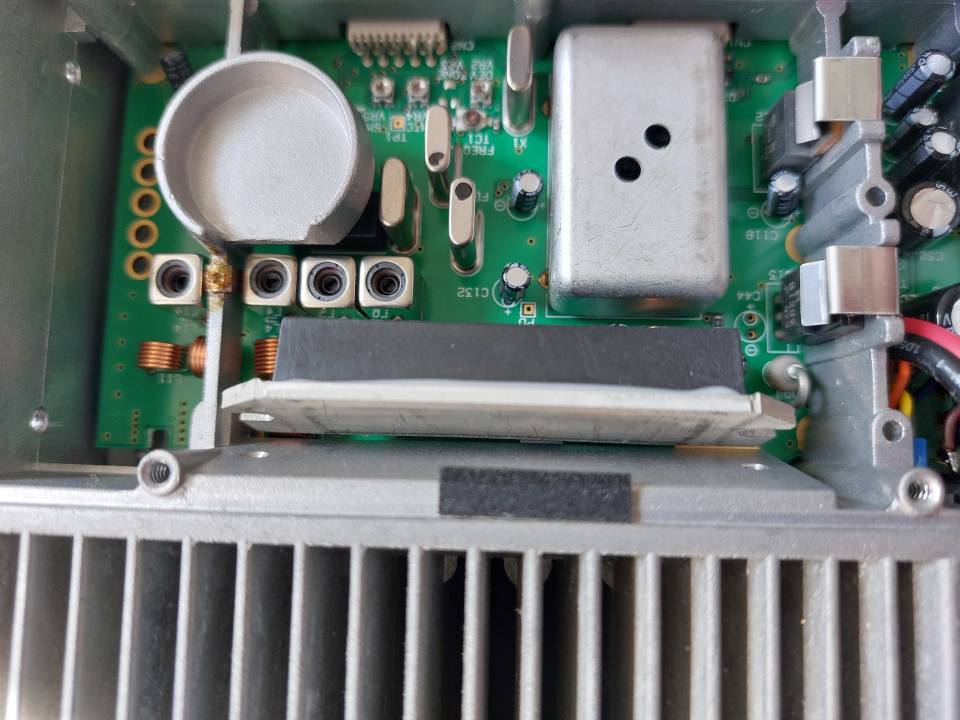
** Detail of PA module **
These radios (I've got two) don't have any thermal compound between the PA and heatsink so I liberally applied that horrid white Servisol paste to the PA and linear regulators. After holding the radio in transmit for a few minutes at full power the heatsink becomes appreciably warm, but not remotely hot - and the PA module is the same temperature so good thermal contact was achieved. After dialling back the RF power from 22W to 10W and leaving it in transmit for 10 minutes the heatsink had reached equilibrium and was ~40C with no forced airflow. At 10W the radio drew 1.6A at 12.2V, so that's ~10W thermal into the heatsink which it certainly appears appropriately sized for.
Finished article
Wire routing
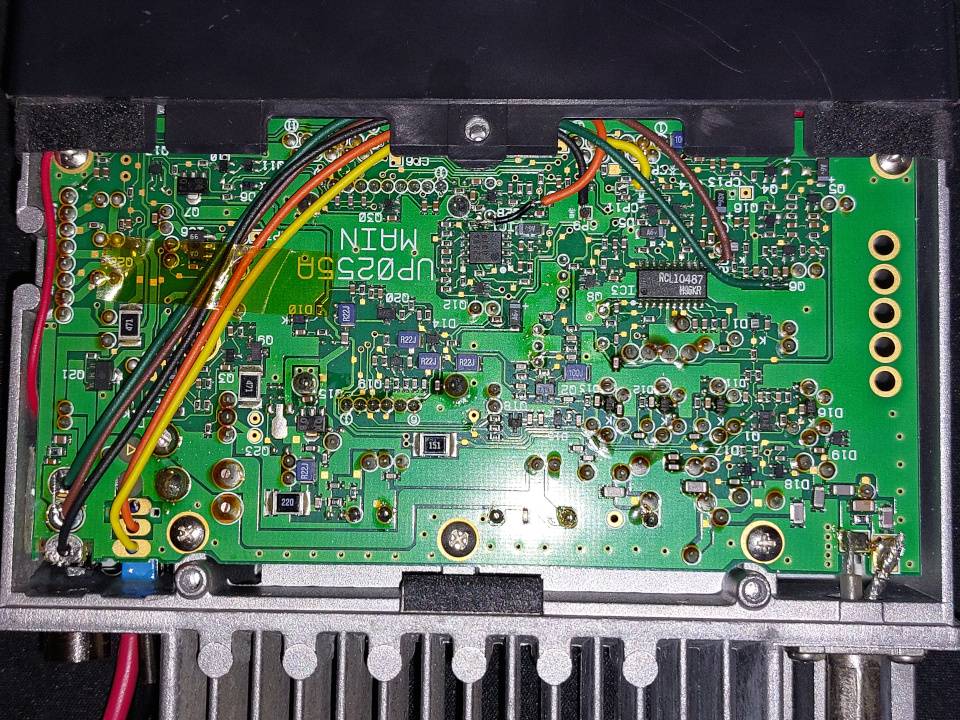
The tap wires were routed around the front central case mounting post before soldering to reduce the chances of pulling a trace off the board. The eagle-eyed viewer will notice an extra wire in the area of the “flat audio in” wire - yes, I pulled off the orange wire's pad when adding the green wire. Silly billy. Nonetheless it was an easy fix :)
de G5RKT, April '25